


I. Classification by function
High-pressure oil inlet pipe
Role: connecting the power pump and steering gear, delivering 22~28bar high pressure fluid to drive the steering mechanism.
Characteristics:
Thick wall, multi-layer reinforced structure (e.g. steel wire braid/twisting layer);
High proportion of metal material (most of the connectors are made of copper or galvanized steel);
Located under the output end of the booster pump.
Low-pressure oil return pipe
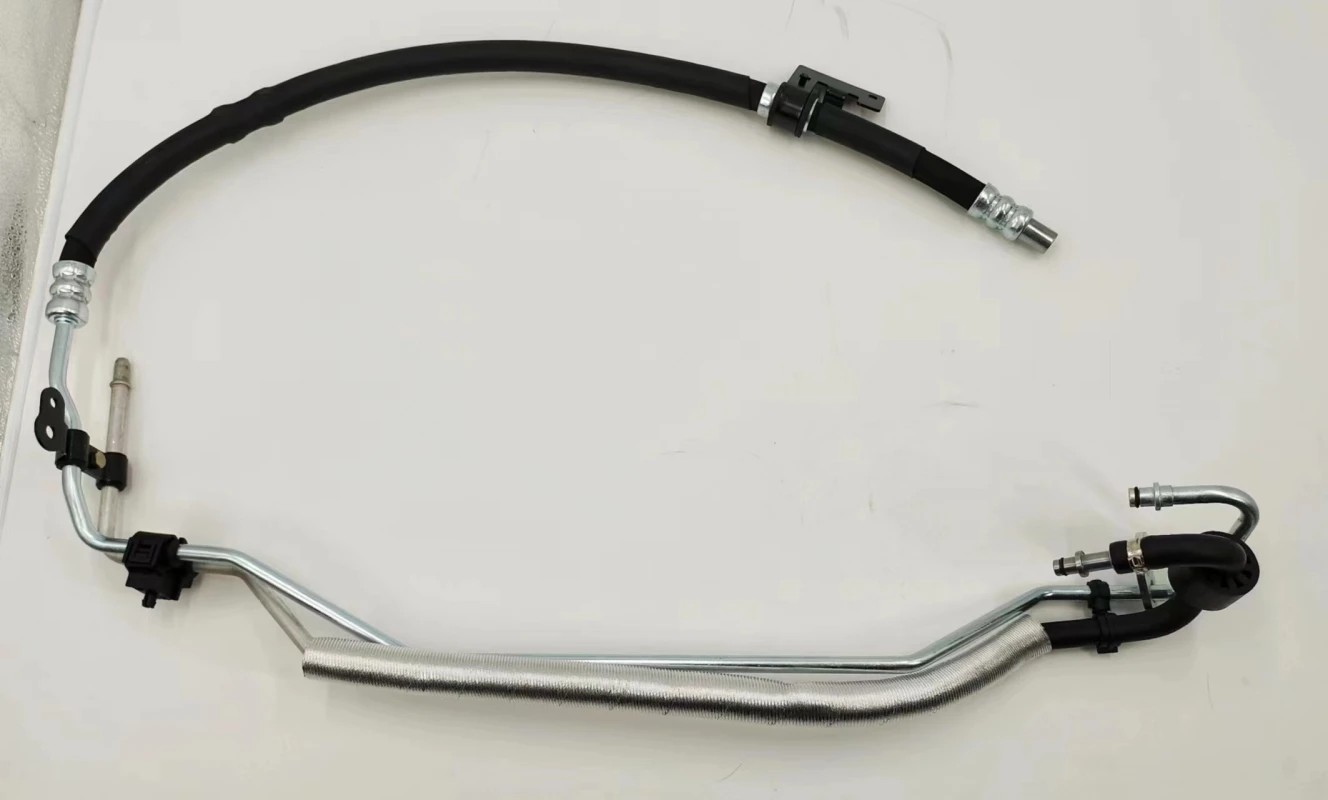
Function: Directs the low-pressure fluid from the steering wheel back to the oil reservoir to complete the cooling cycle.
Characteristics:
The pipe wall is thin, and the material is mainly oil-resistant rubber;
The diameter of the pipe is usually smaller than that of the high-pressure pipe;
It is connected to the top of the steering wheel or the oil pot.
Hydraulic control hose (specific to some models)
Function: Connect to the steering hydraulic cylinder to control the rack action (common in steering systems with four tubes).
Characteristics: long and thin pipe diameter, mostly arranged in parallel with high pressure/return pipe.
⚙️ II. Classification according to material and structure
Type Material composition Pressure-bearing capacity Application Scenario
Steel wire braided hose Rubber inner layer + steel wire braid + oil resistant outer layer ≤48MPa (e.g. SAE J517 standard) Medium-pressure steering system (economy car)
Steel wire twisted hose Reinforced by multi-layer steel wires ≤100MPa (ISO 3862 standard) High-pressure heavy-duty models (trucks, construction machinery)
Hard metal hose Stainless steel/carbon steel galvanized Optimal pressure resistance High-temperature area of engine compartment
Nylon composite hose Nylon layer + barrier coating Medium-pressure return line (lightweight design)
Note: High-pressure hose is prohibited to replace ordinary rubber hose, which is easy to trigger the risk of bursting; oil return hose can be used for short-term emergency oil-resistant hose.
Third, according to the connector type classification
flat seal type (A type)
end face is straight, rely on the gasket sealing, suitable for low-pressure interface.
Spherical sealing type (D type)
Ball head structure, with C type fitting, high pressure resistance and vibration resistance.
Ferrule (Type B)
Locking of the line by means of a ferrule, 24° taper fittings are required.
Quick-change couplings (Type K)
Piston calshaw design, no tools required for disassembly, suitable for high-frequency maintenance scenarios such as mining machinery.
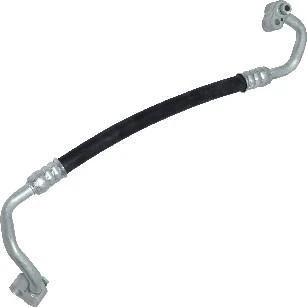
Matching Principle:
The high pressure hose must be original specification (the secondary parts are easy to explode if the pressure is not enough);
The return hose can be matched with oil resistant hose (the inner diameter should be the same).
Price reference:
Economic models high-pressure hose: ¥ 150 ~ 500 (such as Bora, Focus);
Luxury models high-pressure hose: ¥ 500 ~ 1500 (such as BMW, Audi).
Lifespan warning:
Rubber hose surface cracks > 2mm or joints oozing oil need to be replaced immediately;
Metal hose corrosion and perforation need to be replaced as a whole.
Summarize: The steering oil hose is divided into three categories according to its function: high pressure hose, oil return hose and control hose, and the material should be selected according to the pressure. The material should be selected according to the pressure, such as steel wire reinforced hose or metal hard hose, and the type of connector should match the sealing requirement of the system. When replacing the hoses, give priority to the original parts, and regularly check for oil stains and cracks to prevent steering failure.